You do not need a trained palate to begin
A coffee bag says chocolate, orange and caramel. You take a sip and think: it tastes like coffee. That is a perfectly good starting point. Tasting is simply paying a little more attention to your usual cup. You do not need special equipment, expensive beans or an impressive list of fruit names. Begin with one question: what does this remind me of?
Flavor notes are comparisons
For an unflavored coffee, a note such as chocolate or blueberry describes a resemblance in its flavor or aroma. It does not mean those ingredients were added, and the resemblance may be subtle. A chocolatey coffee will still taste like coffee. Intentionally flavored coffees are a separate category; check the packaging if you are unsure. Treat the notes on a bag as an invitation to explore rather than answers you have to match.
Start with three everyday questions
Before looking for a specific fruit, try these broad starting points. More than one can fit the same cup, and none has to fit perfectly.
- Sweet: does it remind you of caramel, honey or brown sugar? You are noticing an impression; it need not taste like a spoonful of sugar.
- Fruity: is there a citrus-like brightness, a berry-like aroma or a dried-fruit richness? You can stop at “fruity” if that is the word that fits.
- Roasty: does it remind you of toast, toasted nuts or smoke? Notice whether you enjoy that character or find it too strong.
A five-minute tasting with your usual coffee
Use the method you already own: French press, AeroPress, pour-over, moka pot, drip machine, pods or instant. Keep your normal recipe for this first exercise.
- Brew a familiar coffee and let it reach a comfortable sipping temperature. There is no need to taste it piping hot.
- Smell before sipping. Write one word that comes to mind, even if that word is simply “toasty.”
- Take a small sip. Choose a broad family before looking for a more specific note.
- Notice the feel and finish. Is it light or full? What stays after you swallow: sweetness, roastiness, dryness or something else?
- Taste again a few minutes later. Write down any difference you notice as the cup cools. If you normally add milk or sugar, taste a small plain sip first if you want, then enjoy the rest your usual way.
Use the flavor wheel from the center outward
Start with Coffee in the center, choose a broad family in the inner ring, then look outward only as far as feels useful. For example: Fruity, then Citrus, then perhaps Orange. “Fruity” is already a useful note. This is our everyday home-tasting wheel, using seven broad families; it is not a professional scoring system. Tap the wheel to open a larger version.
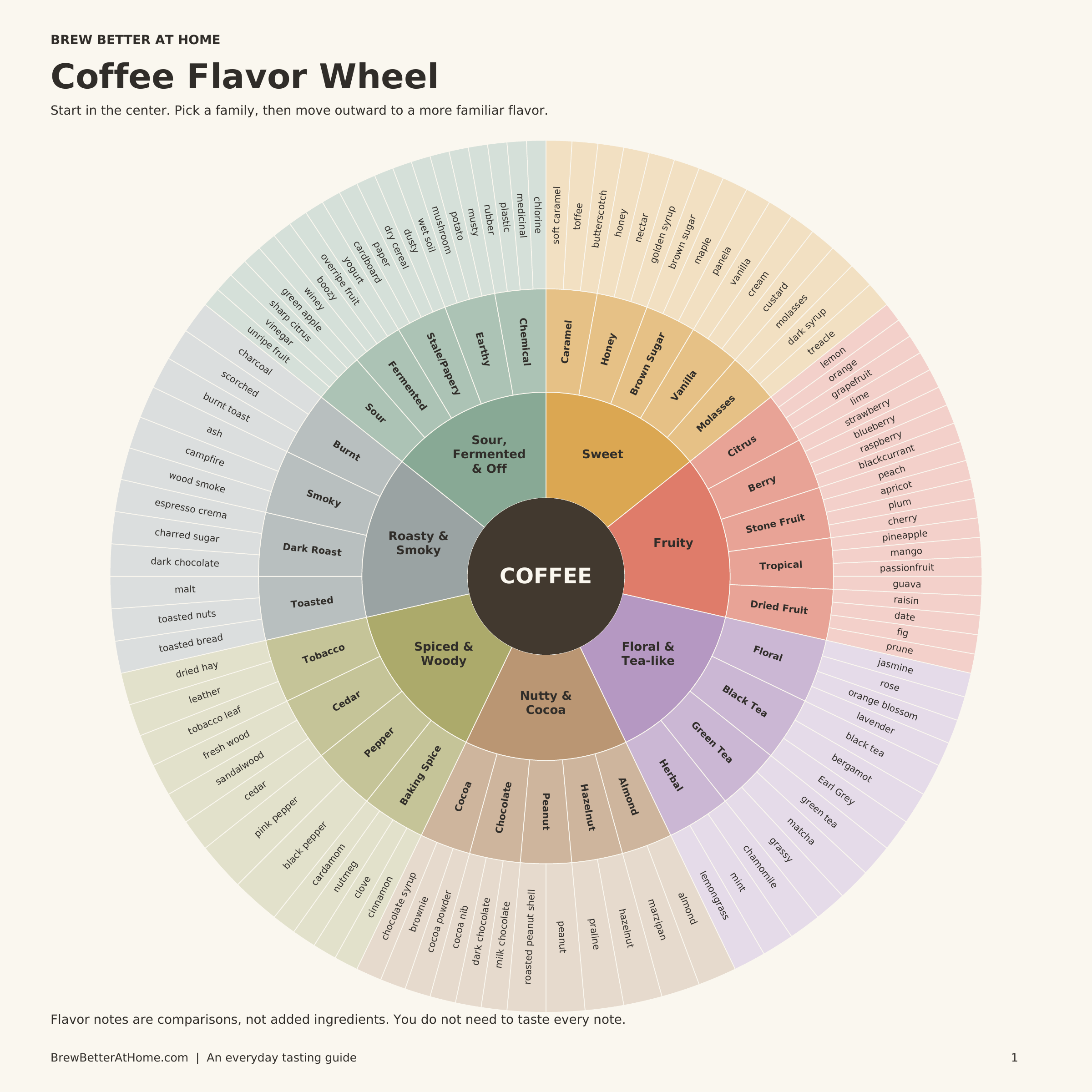
- Sweet: caramel, honey, brown sugar or vanilla.
- Fruity: citrus, berries, stone fruit, tropical fruit or dried fruit.
- Floral & Tea-like: flowers, black tea, green tea or herbs.
- Nutty & Cocoa: almonds, hazelnuts, peanuts, chocolate or cocoa.
- Spiced & Woody: baking spices, pepper, cedar or tobacco-like aromas.
- Roasty & Smoky: toast, dark roast, smoke or burnt notes.
- Sour, Fermented & Off: sharp sourness, winey notes, paperiness, earthiness or chemical-like notes. This group includes both characteristics some people enjoy and possible quality problems.
Write two notes, then one preference
Keep a notebook or a note on your phone. Record the coffee, brew method and recipe, then add two observations and whether you would make it again. For example: “French press, 30 g coffee and 480 g water. Cocoa aroma, full feel. I like this plain; next time I will use the same recipe.” This is a sample, not a description every French press coffee should match.
Describe first, troubleshoot second
A flavor is a clue, not a diagnosis. Fruity brightness can be enjoyable; an unpleasantly sharp cup might need a brewing adjustment. Bitterness can come from the roast as well as brewing. Do not change your recipe just because a descriptor sounds unusual. If you dislike the cup, change one thing next time and compare. Our Fix your cup guide can help you choose a starting point.
Try a simple comparison another day
If describing one coffee feels difficult, brew two different coffees with the same method and recipe, then alternate small sips at a comfortable temperature. Which feels fuller? Which seems fruitier or roastier? Write down the difference before reading the tasting notes on the bags. You are building your own reference points, one cup at a time.
Keep learning at your own pace
You do not have to memorize the wheel. Return to one or two familiar words and let your vocabulary grow naturally. For short recipes and useful home-coffee lessons, join The Brew Better Letter and get the free Brewing Basics Cheat Sheet through the link below. Keep the printable tasting kit nearby if you would like a place to record what you notice.
Keep the tasting kit beside your brewer
Want a printable copy for your next cup? The Coffee Flavor Wheel & Tasting Kit includes the color-coded wheel, a tasting and troubleshooting guide, and a reusable tasting notes sheet. Download the three-page PDF for $3 on Ko-fi using the link below. Print a fresh notes sheet when you try a new coffee or recipe.
For your next cup, write just two notes: one thing you notice and one thing you enjoy. “I would happily drink this again” counts.
Keep brewing
Further reading
Specialty Coffee Association: using a flavor wheel from broad families to specific notes (opens in a new tab)Our recipes are starting points. Follow your brewer’s instructions and adjust to your taste.